

Written by Delia Brows Studio
 Professional beautician specialized in rejuvenation, facial diagnosis, aesthetic equipment and advanced skin care. Recommendations, guides and products with backup dermatological and visible results. Also certified in micropigmentation and therapeutic massage, integrating well-being, advanced equipment and comprehensive aesthetics.
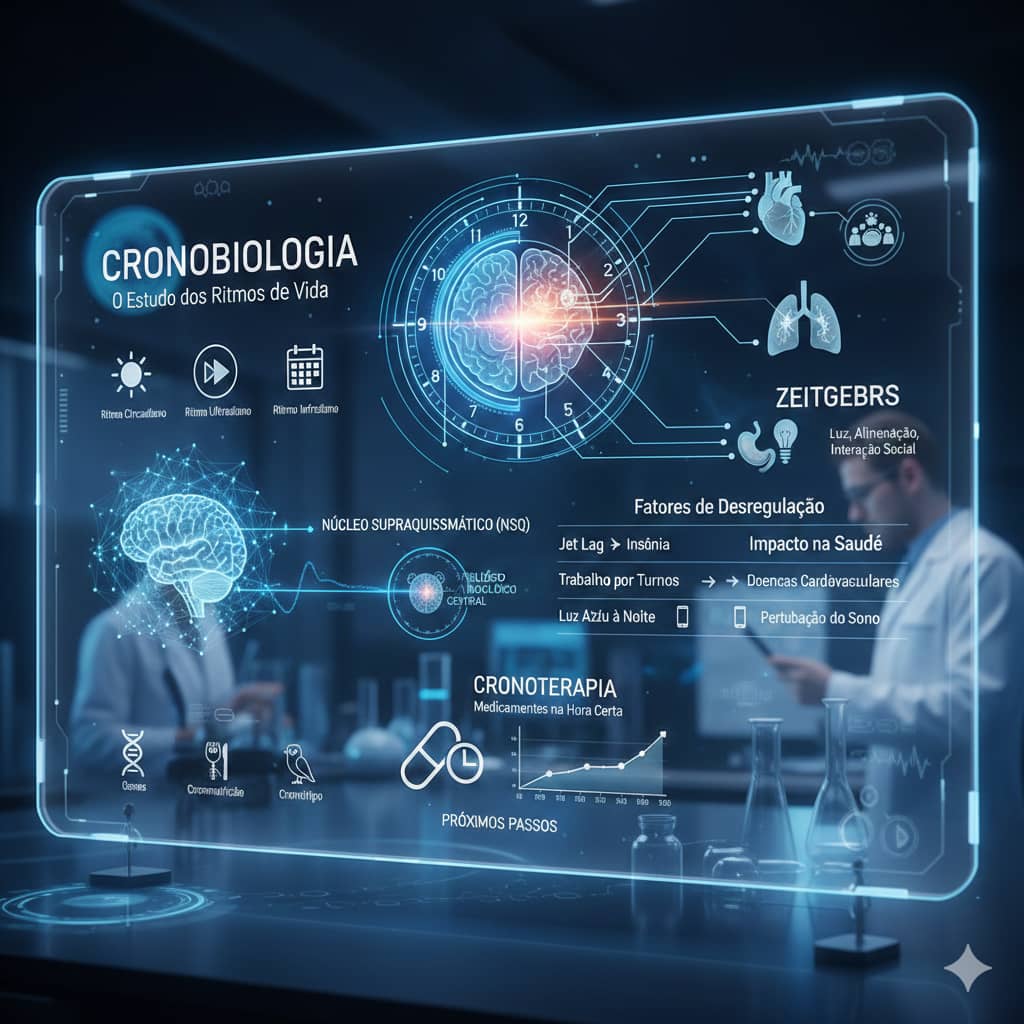
In a world that often glorifies the culture of «everyone being always active,» we ignore the fundamental truth of our biology: we are rhythmic beings. Performance, concentration, and well-being depend not only on how much you work, but when you do it. The science that studies these patterns is called chronobiology, and mastering it is the key to unlocking energy and efficiency that seem unattainable.
This article is a deep dive into your inner clock, explaining how biological rhythms, key hormones, and identifying your chronotype can radically transform your daily life.
The three master rhythms: circadian, ultradian and infradian
To understand chronobiology, we must start with the three levels of rhythms that govern human life:
1. The Circadian Cycle: The 24 Hour Master
The circadian rhythm (from the Latin circa diem, «about a day») is, without a doubt, the best known. It is a cycle of approximately 24 hours that regulates physiological and behavioral processes. This rhythm is governed by the suprachiasmatic nucleus (NSQ), a small group of neurons located in the hypothalamus, which acts as the «master clock» of our body.
The NSQ is mainly synchronized by light, which perceives the eyes. is responsible for establishing:
* The sleep-wake cycle.
* Body temperature patterns.
* Blood pressure.
* Secretion of vital hormones.
2. Ultradian rhythms: high frequency cycles
While the circadian encompasses a whole day, ultradian rhythms operate in much shorter cycles, usually 90 to 120 minutes. The most famous example is the REM/Non-REM sleep cycle, but these rhythms are also crucial during wakefulness.
Our maximum concentration capacity aligns with these cycles. After 90 minutes of deep and intense work, our brain energy decreases, and the performance drops. Ignoring this ultradian rhythm is the main reason for fatigue mid-morning or mid-afternoon.
3. Infradian rhythms: long-term cycles
These rhythms last more than 28 days and are less evident in the day to day, but deeply influential. The clearest example is the female menstrual cycle, but both sexes experience seasonal variations in mood, energy, and metabolism, often influenced by changes in sunlight hours.
Time Hormones: Melatonin and Cortisol
The NSQ orchestrates our rhythms through the release of key hormones, acting as messengers that tell each body cell if it is day or night.
1. Melatonin: the sign of the night
Melatonin is not a «sleep hormone» as such, but the sign of darkness. Its secretion begins to increase dramatically at dusk, around 2-3 hours before we feel sleepy, reaching its peak in the middle of the night.
* Main function: decrease body temperature, reduce alertness and prepare the body for rest and cell repair.
* The biggest enemy: exposure to blue light (from LED screens and lights) at night, which instantly suppresses your production, delaying the beginning of the dream.
2. Cortisol: The morning alarm
Known as the «stress hormone,» cortisol plays a vital role in awakening. Its rhythmic pattern is essential:
* Peak (night valley): Cortisol is at its lowest level in the middle of the sleep cycle.
* Peak (Awakening): Your levels are dramatically fired just before and after you wake us up. This increase, called Cortisol Awakening (CAR) response, gives us the energy and alertness needed to start the day.
* Evening Valley: Your levels gradually decrease throughout the day, reaching its lowest level just before melatonin begins to rise.
key data: A flattened cortisol pattern (low morning and high at night) is associated with burnout and health problems. Synchronizing your cortisol is vital for stable energy.
Chronotypes: Lark, owl or hummingbird?
Our circadian watches are slightly differently wired. This biological preference in the morning, afternoon or the intermediate point is known as a chronotype. Dr. Michael Breus identifies four main archetypes:
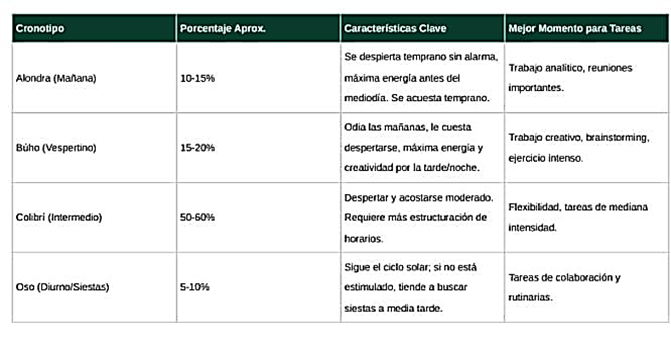
How to identify yours: Ask yourself: If you didn't have an alarm or compromise, what time would you wake up and what time would you start feeling naturally sleepy? The answer will reveal your biological inclination.
Practical strategies for resynchronization (Social Jet Lag)
Most of us suffer from a «social jet lag»: the difference between our biological sleep schedule (the weekend) and the work schedule (weekday). This chronic desynchronization is exhausting. Here are strategies to align your pace and maximize performance.
1. Light Therapy: The main synchronizer
Light is the most powerful Zeitgeber (time giver).
* Morning (Awakening): Exposure to intense natural light for 5-10 minutes as soon as you get up. This suppresses the remaining melatonin and activates the release of cortisol, starting your biological clock for the day.
* Late (sunset): Make a brief exposure to natural light at sunset. This is a key signal to the NSQ that the day is ending, making the clock prepare to start the melatonin at the right time.
* Night (before sleeping): Dramatically reduces light. Use blue light filters on screens or glasses that block blue. Darkness is essential for the production of melatonin.
2. Meal schedule: The role of time
Eating also acts as a signal for «peripheral clocks» (the rhythms in your organs, such as the liver and pancreas).
* Consistent breakfast: Eat one hour after awakening signals the start of the active phase of metabolism.
* Night fasting: Avoid eating 2-3 hours before going to bed. Digestion in the resting phase interferes with the drop in the required core temperature for deep, quality sleep.
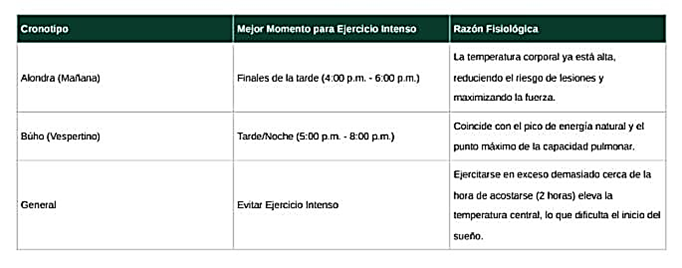
3. Chronotype-adapted exercise strategies
The moment of exercise can boost or sabotage your performance:
4. The power of the ultra-dian nap
Since our concentration cycles are 90-120 minutes, consciously schedule pauses to restore your energy.
* Short nap (Power Nap): A 20 minute nap between 1 p.m. and 3 p.m. It can restore the ultradian cycle and release the homeostatic pressure from sleep, without taking you to deep sleep.
* Active Pause: If you can't sleep, just get up, look out a window or do stretches. Clearing the mind for 10 minutes is enough to reset the focus.
Conclusion: From the fight to the harmony
Stop fighting your biology is the first step towards a life with more energy. By applying the principles of chronobiology—syncing your exposure to light, your meals, and your resting moments with your circadian and ultra-Dian rhythms, and respecting your unique chronotype—you can go from feeling exhausted and scattered to experiencing a steady and optimized flow of performance and well-being.
Your body is not a machine; it is a perfectly calibrated clock. It's time to wind up correctly.

Related Articles
Safe peelings on Latin skins and IV–VI phototypes: common errors that cause spots
Professional beautician specialized in rejuvenation, facial diagnosis, aesthetic equipment and advanced skin care. Recommendations, guides and products with dermatological support and visible results. Also certified in micropigmentation and massage...

Protocol for sensitive skin “Defense and ideal care”
Your skin deserves attention and affection. Don't let sensitivity limit your beauty. This protocol has been designed with soft, effective and highly nourishing ingredients that provide relief and comfort even to the most delicate skins. Every step of this protocol...
No Results Found
The page you requested could not be found. Try refining your search, or use the navigation above to locate the post.
Become a certified expert in smart microneedling
Access to my premium course
Learn to master the most advanced facial rejuvenation technique adapted to Latin skins.
subscribe to my list
I only commit to sending you a quality email monthly
Follow us
Follow me on all my social networks