Written by Delia Brows Studio

💎  Professional beautician specialized in rejuvenation, facial diagnosis, aesthetic equipment and advanced skin care. Recommendations, guides and products with backup dermatological and visible results. Also certified in micropigmentation and therapeutic massage, integrating well-being, advanced equipment and comprehensive aesthetics. 


}


How to remove dark spots and hyperpigmentation without destroying your skin

(full guide by phototype)

Do you look in the mirror and feel that the spots look more than your own face?
Melasma, cloths, sun spots, acne marks... and every “miracle” cream that you try seems to make it worse or do nothing.
You are not alone.
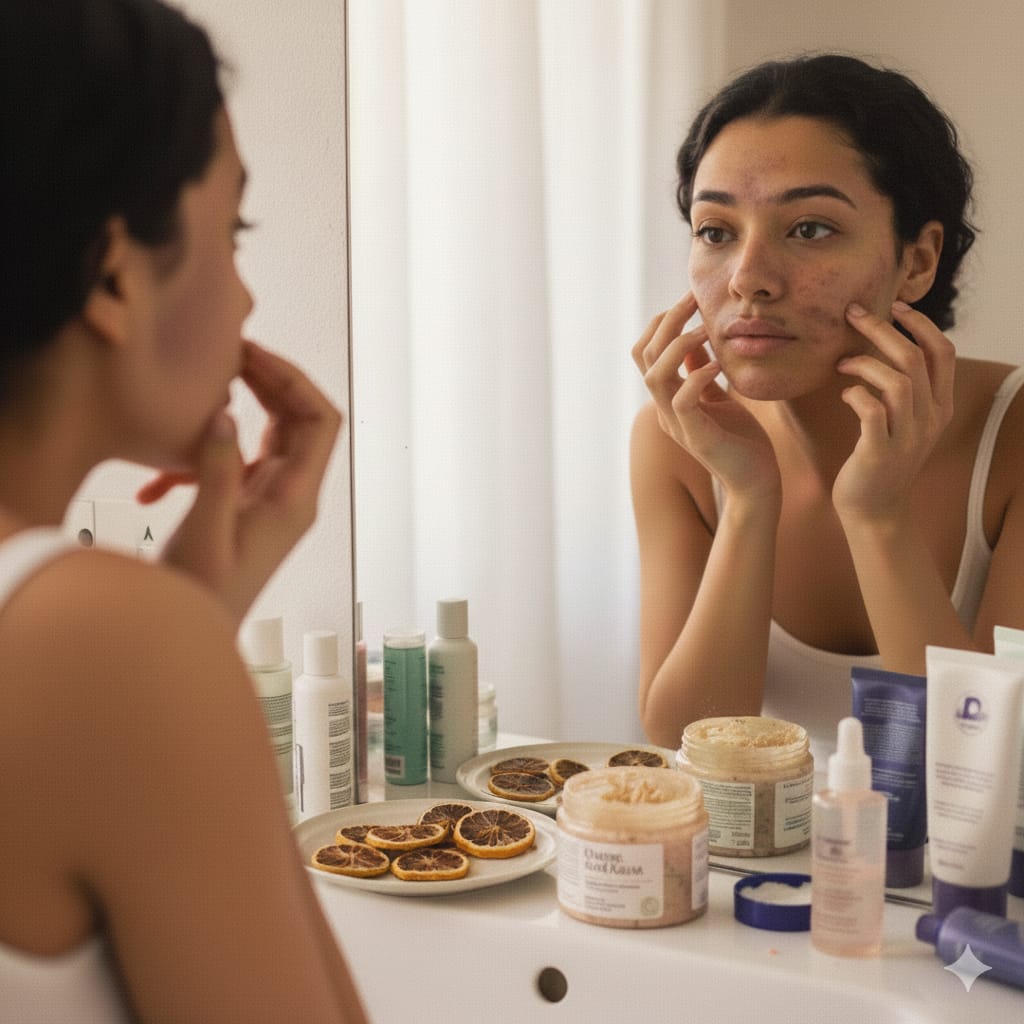
As a beautician, I see every week tired skins of trying random products, aggressive exfoliations, viral tikTok remedies with lemon and baking soda... and the result is always the same:
 
➡️ More irritation, ➡️ More spots,
➡️ More frustration.
 
In this guide I will explain, in a simple and smoke-free way:
• Why do spots come out,
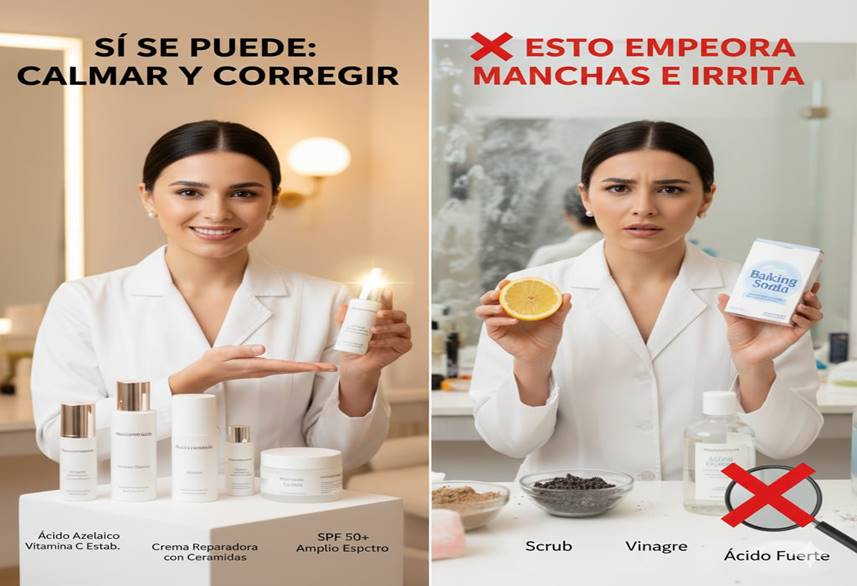
• What things make them worse,
• What are the depigmenting assets that do have support,
• How to put together a complete routine (morning and night),
• And how to adapt all this to your phototype (skin color), because a very light skin is not treated as well as a brown or black skin.

⚠️ Important: This guide is educational. If you have new spots, which change shape or color, or severe melasma, you should always be evaluated by a dermatologist

Mistakes that damage your skin and make you age earlier (according to the beautician)
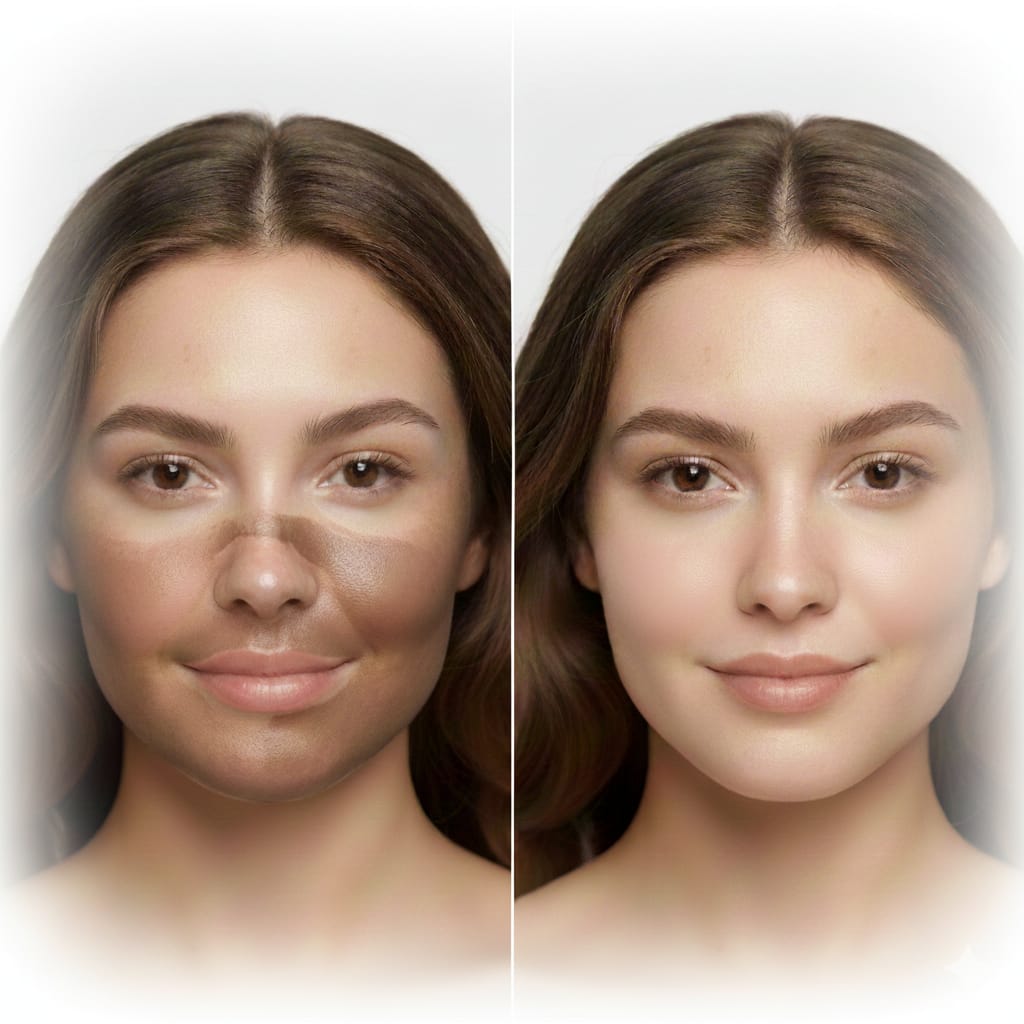
Hyperpigmentation is an increase in pigment (melanin) in certain areas of the skin.
It can appear as:
• Sun brown spots,
• Cloth or melasma (soil verse in front, cheeks, mustache),
• Dark marks after pimples, burns, or irritations.
 
In simple language:
The skin defends itself by producing more pigment when it feels attacked:
☀️ Sun,
🔥 HEAT,
🧪 Product irritation,
💥 Deformation (exploited grains, strong peelings, aggressive hair removal, etc.)
Therefore, the key is not to “wipe away crazy”, but to reduce inflammation, protect and gradually clarify.


Mistakes that make your spots worse (even if they seem to “whiten”)

Before we talk about things that help, let's talk about what ruins your skin:
Use lemon, vinegar, baking soda or abrasive homemade mixtures.
Exfoliate strong with thick grain exfoliants on an already inflamed skin.
Use strong acids every day without rest or professional guide.
Abuse perfumes, irritating essential oils on stained skin.
Do not use sunscreen “because today there is no sun”.
Try something different every week without giving anything time.
If you want to see a real improvement, the first step is to stop fighting with your skin.
Your routine should calm, protect and then correct.


The 4 Pillars to Treat Spots Smartly

1️⃣ Photoprotection every day
Without sunscreen, no depigmenting works long term.
SPF 30–50, broad spectrum.
Reapply every 2–3 hours if you are outdoors.
In Melasma, better very stable filters and, if you can, hat/glasses.
2 ️⃣ Anti-inflammation and skin barrier
If the skin is irritated, inflamed, or dry, the melanin is triggered.
You need ceramides, glycerin, hyaluronic acid, mild niacinamide.
Nothing to “burn so that he fights”.
3️⃣ Smart Depigmenting Assets
Combinations that usually help (always introduced little by little):
Niacinamide → Regulates inflammation and helps a more even tone.
Azelaic acid (cosmetic) → Excellent on skin with spots + granites.
Mandelic acid / mild lactic → Scrubs more friendly than strong glycolic.
Stabilized Vitamin C → Antioxidant and stain support.
Retinoids (retinol, retinal) → Night renovator (introduced with patience).
4️⃣ Patience + Constancy
The spots were not made in a week. They don't leave in a week either.
A realistic plan is to see changes in 8–12 weeks with a well-run routine.

Morning routine for hyperpigmentation

(all phototypes)

Think of the morning as: Protect + Light.
Step 1: Gentle Cleaning
An aggressive sulfate-free cleanser, which does not leave the skin tight.
Dry/ripe skin: cream or milk textures.
Mixed/Grease Skin: Lightweight, non-abrasive gel.
 
Step 2: Antioxidant Serum + Mild Depigmenting
Here you can combine, for example:
Stabilized Vitamin C (for luminosity and defense).
Niacinamide (for spots, pores and barrier).
Smooth Azelaic on skin with spots + acne.
(This is where you put your recommended serums with Amazon link.)
 
Step 3: Moisturizer that takes care of the barrier
Look for ingredients like:
ceramides,
glycerin,
hyaluronic acid,
squalane,
panthenol.
Texture according to skin type:
Dry: rich cream,
Mixed: Gel-cream,
Grease: Light fluid.
 
Step 4: Sunscreen (your weapon #1)
SPF 30–50, broad spectrum.
Skin with melasma: the more constant you are, the better.
If you are outdoors → Reapply every 2–3 hours.

The beautician's advice: have a “home” protector and another in the wallet. If you have it at hand, you use it. 

Nighttime routine for spots

(by phases)

The night is where the strongest work comes in: renew + repair.
Type night (no strong acids)
1. Double cleaning (if you wear makeup or resistant SPF).
2. Moisturizing serum (hyaluronic acid, glycerin).
3. Depigmenting serum (niacinamide, azelaic, mild derivatives).
4. Repairing cream with peptides and lipids.
 
Acid nights (1–3 times/week according to tolerance)
Instead of the depigmenter, it can be used:
• A mild chemical scrub: mandelic, lactic or PHA.
• Always waiting to see the response of the skin. No intense burning.
Introduction of retinoids
When the barrier is stronger, retinol or retinal can be introduced:
• Start 1–2 nights a week.
• Do not mix on the same night with strong exfoliants.
• Observe: If there is severe irritation, slow down or pause.

Adaptation by phototype

Here you differ from the generic content:
Phototypes I–III (light to intermediate skin)
• Increased risk of redness and photoaging.
• They tend to tolerate better AHA (mandelic, lactic) if they are handled well.
• Key:
• Control irritation,
• Protect from the sun obsessively,
• Introduce retinoids calmly.
 
Phototypes IV–VI (Latina, Brunette, Black skin)
• Increased risk of post-inflammatory hyperpigmentation.
• They become more easily stained if the skin becomes irritated or inflamed.
• Key:
• Prefer PHA, Azelaic, Niacinamide, mild vitamin C,
• Avoid homemade aggressive peelings,
• Lots of hydration and sun protection.

⚠️ IMPORTANT For these skins:

«Your skin does not need to suffer or stripping to improve. On the contrary: the less you irritate it, the better it responds in spots».

Home appliance: When LED and when not to abuse

drove
Red/infrared LED light can help in:
inflammation,
texture,
Collagen support.
 
In case of hyperpigmentation, it is usually used in combination with:
good routine,
Strict sun protection.
They do not replace depigmenting or medical treatment, but adds.
 
microcurrent
The microcurrent works more on muscle than on spots.
It can help firmness, oval facial, tone.
In stained skin, the risk is more in aggressive products and sun than in the microcurrent itself, but it should always be done on a well-hydrated skin, without wounds or irritation.
If you have Botox, fillers, or recent medical treatments, you should always follow your doctor's instructions before using any device.

Habits that enhance clearance from the inside out

The products help, but your skin also reflects:
• If you sleep 4 or 8 hours,
• If your diet is ultra-processed or rich in good fruits, vegetables and fats,
• If you smoke, you drink a lot of alcohol, etc.
Small changes that add up:
• Increase water and fruits rich in vitamin C (kiwi, citrus, red fruits).
• Include good fats: avocado, olive oil, nuts.
• Sleep better: The skin tone changes when you rest.
• Manage stress (chronic stress = chronic inflammation).
Supplements (collagen, vitamin C, antioxidants) should always be indicated by a health professional.
And now what do you do with so much information?
If you've gotten this far, you already know more about stains than most people who buy “miracle creams”.
My recommendation:
1. Choose a single base routine for morning and evening.
2. Enter only one new asset at a time (for example, niacinamide).
3. Observe your skin at least 3–4 weeks before changing.
4. Be consistent with sunscreen (this is the step that gives the most results).
 
And if you want to go one step further:
As a beautician, I can help you design a custom routine by phototype, skin type and spot level.
If you want to review your current routine or want to recommend specific products for your case (with accessible options and luxury options), write me or leave your comment.


Digital course: hyperpigmentation protocol.

Become a certified hyperpigmentation expert…

Related Articles

Protocol: Face Lift.

Protocol: Face Lift.

“Los levantamientos faciales se han convertido en una de las técnicas más valoradas en el campo de la estética, no solo por su capacidad para rejuvenecer el rostro, sino también por su facultad para devolver la confianza y la vitalidad a quienes se someten a ellos. A...

No Results Found

The page you requested could not be found. Try refining your search, or use the navigation above to locate the post.

Access to my premium course

Learn to master the most advanced facial rejuvenation technique adapted to Latin skins.

subscribe to my list

I only commit to sending you a quality email monthly 


Follow us

Follow me on all my social networks 

0
    0
    your cart
    Your Cart is emptyreturn to shop