Written by Delia Brows Studio

💎Professional beautician specialized in rejuvenation, facial diagnosis, aesthetic equipment and advanced skin care. Recommendations, guides and products with backup dermatological and visible results. Also certified in micropigmentation and therapeutic massage, integrating well-being, advanced equipment and comprehensive aesthetics. 


Mistakes that damage your skin and make you age earlier (according to the beautician)

If there is a product that really decides if your skin ages faster or slower, it is not the $200 night cream.
is the sunscreen.
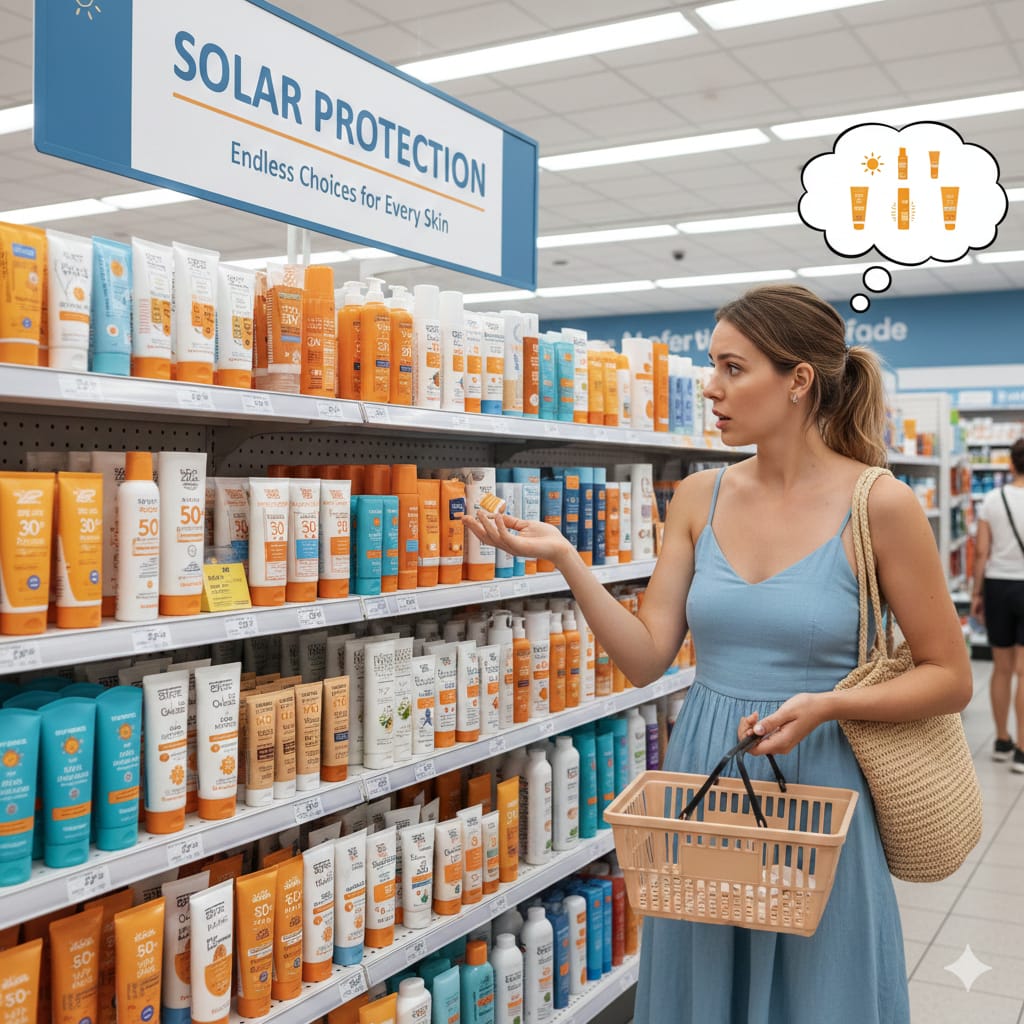
The problem is that when you start reading tags weird words appear: mineral, physical, chemical, hybrid, zinc oxide, avobenzone, mexoryl, pa++++, SPF 50, UVA, UVB, blue light…
And you end up buying “the one they recommended you on TikTok”, without knowing if it is the best for your skin.
Today I am going to make it so clear that, when you finish this article, you will know:
 
• The real difference between chemical, mineral and hybrid filter.
• What are its advantages, disadvantages and myths.
• How to choose the ideal according to your skin type, phototype, lifestyle and sensitivity.
• What should you look at the label so as not to waste your money.

The basics: What does a sunscreen do?

A sunscreen (or sunscreen) is a product that protects the skin from:
 
• UVB → Burning rays: redness, sunburn, skin cancer.
• Grape → Aging rays: wrinkles, spots, sagging, deep damage.
• And some modern protectors also help against:
• Visible light (including blue screen light)
• Infrared light (heat), which worsens spots and rosacea in some people.
The SPF tells you mostly about UVB protection.
UVA protection is usually indicated with symbols such as UVA within a circle, “P+ to Pa++++”, or texts like “Broad Spectrum”.


Chemical filters: the most common and cosmetically “pretty”
What are they?
Chemical filters (also called organic) are molecules that absorb the energy of UV radiation and transform it into harmless heat for the skin.
Some examples you usually see on tags:
• Avobenzone
• Octisalate
• Octocrylene
• Homosalate
• New more stable filters in European/Asian formulas: Tinosorb S, Tinosorb M, Uvinul A Plus, Uvinul T 150, Mexoryl SX/XL, etc.
advantage
• Very light texture: Ideal for oily, mixed skin or people who hate feeling “weight” on the face.
• They are best integrated into gel, fluid or light lotion formulas.
• They can be formulated with an invisible finish, even on dark skin (they do not leave “white pest”).
• Many come mixed with other active ingredients: antioxidants, niacinamide, hyaluronic acid, etc.
disadvantages
• They can irritate very sensitive skin or with rosacea, dermatitis or very damaged barrier.
• In some people they can sting the eyes (typical when sweating or on the beach).
• Requires a very stable formulation, some old filters are degraded with the sun if they are not well combined.
• They are not the best option for extremely reactive skin or with photoinduced allergies, although there are well-formulated exceptions.
Who are they going to be good for?
• Normal, combination or oily skin looking for something light and without a white tone.
• People who wear daily makeup, because it integrates better under the base.
• I–VI phototypes that want an invisible finish.

Mineral filters (physical): the classics for sensitive skin

What are they?
They are filters of inorganic origin (minerals) that act mainly reflecting and dispersing UV radiation:
• Zinc oxide
• Titanium dioxide
In practice, they also absorb some of the radiation, but their fame comes from the idea of “physical shield” on the skin.
advantage
• They are usually better tolerated by very sensitive, atopic or rosacea skin.
• They are considered a very safe option for children, pregnant women and post-procedures (when the skin is more vulnerable), as long as the rest of the formula is soft.
• Zinc oxide protects well from UVA and UVB, and some pigment products also help against visible light, important in spots and melasma.
• Less chance of itching in eyes (many people tolerate them better around the contour).
disadvantages
• The famous “ghost effect”: they leave a white or grayish layer, especially in medium and dark skin.
• Textures can be heavier, dry or pasty if the formula is not well worked.
• Hard to love on very oily skin if they are not well formulated.
• They can mark more of the facial texture or hair if they are applied excessively or do not spread well.
Who are they going to be good for?
• Sensitive, reactive skin with rosacea or dermatitis.
• People who have had a bad reaction to chemical filters.
• Post-procedures (peelings, soft laser, aesthetic microneedling), always with professional indication.
• Skins with melasma or spots, when the protector also has lightweight base pigments, because they help against visible light.


Hybrid Filters: The Best Of Both Worlds

Hybrid sunscreens combine chemical filters + minerals in the same formula.

Why do they formulate them like this?
• To take advantage of the high UVA/UVB protection and good cosmetics of modern chemical filters.
• More stability and additional coverage provided by zinc oxide and/or titanium dioxide.
• and improve texture, tone, finish and protection against different types of radiation.
advantage
• They usually achieve high protection with more pleasant textures than a pure mineral.
• They can minimize the white effect of the mineral while at the same time lowering the typical irritation of certain chemicals in old formulas.
• They are very versatile for daily use in the city, office, screen and outdoor activities.
disadvantages
• They are not always suitable for skin with extreme hyper-sensitivity (someone can react to a chemical in the mixture).
• On very dark skin, some hybrids still leave a slight trace if they have a lot of mineral.
• Quality depends a lot on the brand and type of filters you use (not all hybrids are the same).
Who are they usually a good option for?
• People who want a balance: Good protection + pleasant texture + Less risk of irritation.
• Mixed or normal skins that do not want to give up comfort, but are looking for something more “kind” than just a chemical.
• For daily use as a “office” protector + real life.

Common myths that confuse your clients

“The mineral filter is always better and healthier”
Not necessarily.
The important thing is not only the type of filter, but:
• The complete formulation (texture, excipients, preservatives, perfume).
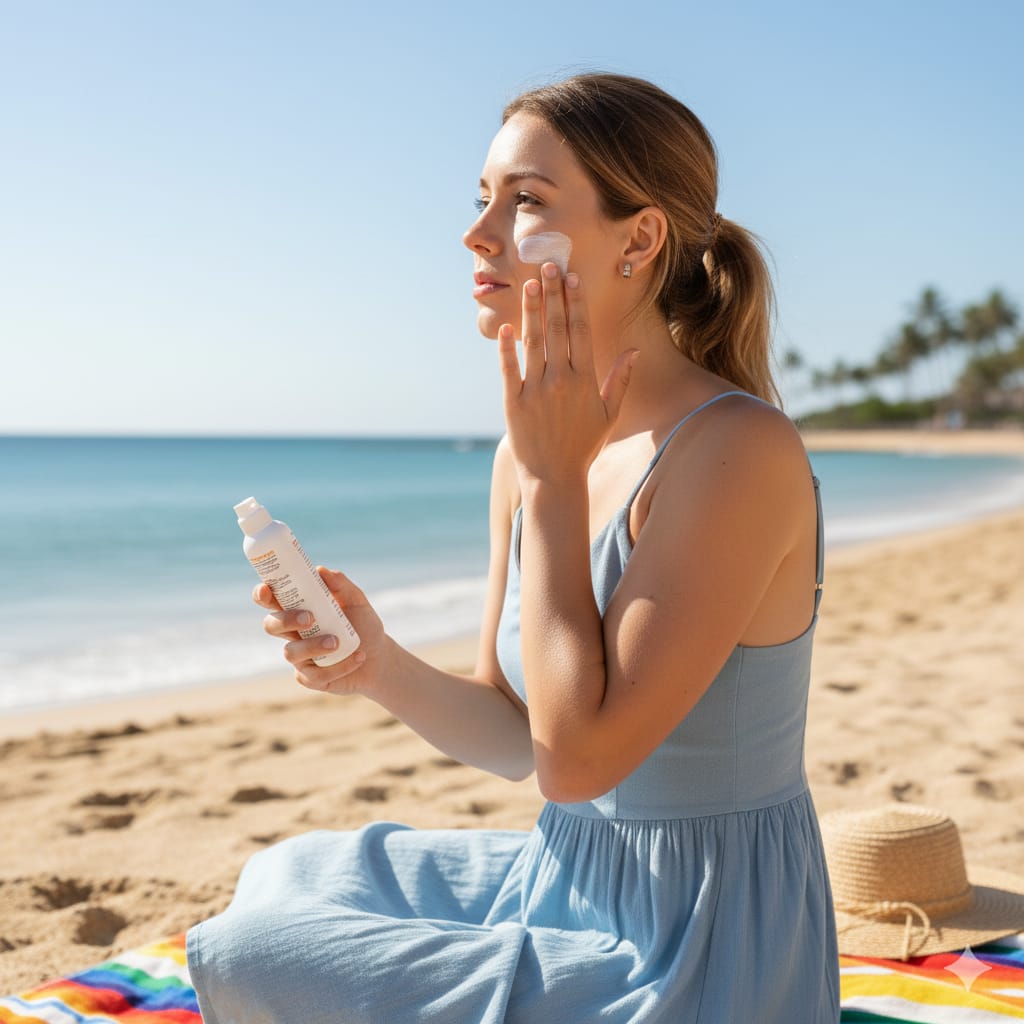
• That the protector is applied in sufficient quantity (approx. 2 fingers of product for face and neck).
• And that it be reapplied when there is continuous exposure (beach, swimming pool, direct sun, sport).
A poorly formulated mineral, which no one applies because it is pasty and white, protects less in real life than a light chemical that your client wears every day and reapplies content.
“Chemical filters are toxic and always damage the skin”
no. There is a lot of fear on social networks and viral videos.
Chemical filters go through security checks and are reformulated over time.
It is true that some molecules have been revised or limited, but that does not mean that all chemicals are dangerous.
The key is:
• Choose serious brands that invest in research.
• Listening to the skin: If it irritates, itches, reddens, it is not for you.
“If it is SPF 100, I don't need to reapply”
False.
Although the SPF is high, the reality is that:
• The protector moves, cleans, is transferred with rubbing, sweat, masks, etc.
• The recommendations continue to insist on reapplying if there is prolonged direct sun exposure (beach, swimming pool, countryside, outdoor work).

How to choose your ideal protector without going crazy

Let's make it easy, a beautician version that thinks of the real life of your clients.
1) According to your skin type
• Oily/mixed skin with acne
• Texture: Gel, fluid, light lotion “Oil Free”.
• Filters: Chemicals or light hybrids usually go better.
• Avoid very occlusive or mineral formulas very heavy if they generate more shine.
• Dry/dehydrated/mature skin
• Texture: Light to medium cream, with moisturizing ingredients (glycerin, hyaluronic acid, ceramides).
• Filters: You can use chemicals, minerals or hybrids, but do not dry out or mark lines.
• Ideal: Protectors that do double function treatment + protection.
• Sensitive skin / Rosacea / Dermatitis
• Find formulas without scent, without irritating alcohol, with few ingredients.
• They tend to tolerate better minerals or hybrids, although there are very well formulated chemicals that also go well.
• Always try first in a small area.
2) According to your phototype (skin color)
• Phototypes I–III (light to intermediate skin)
• They can use almost any type if they tolerate it well.
• Be careful with very white formulas if that makes you not want to reapply.
• Phototypes IV–VI (brown skin to very dark)
• Look for invisible or with tone that do not leave gray.
• Many times they get along better with modern chemicals or well-pigmented hybrids.
• For spots and melasma, pigment protector + reapplication is gold.
3) According to use and lifestyle
• Office / Interior work with screens
• Daily protector with comfortable texture that you do not feel heavy.
• If you have spots, better with pigment + antioxidants.
• Beach, swimming pool, outdoor sport
• Sweat and water resistant texture.
• Do not look at SPF only: Reapply every 2 hours approx and after getting into the water.
• Aesthetic post-procedures (peelings, soft laser, aesthetic microneedling)
• Always follow the instructions of the professional.
• Soft textures are usually recommended, often minerals or hybrids, without perfume and very well tolerated.


Conclusion: The best filter is the one you love to use every day
Beyond the “chemical vs mineral” wars, what decides the health of your skin is:
 
• That you have a sunscreen that you like so much that you use it daily.
• Reapply in situations of strong sun or prolonged exposure.
• That it is adapted to your skin, phototype, lifestyle and sensitivity.
If your skin is sensitive: Mineral or hybrid may be your best friend.
If you hate feeling heavy things: A light chemical can be your salvation.
If you have spots: look for good protector with high protection UVA and, if possible, with pigment.
Your sunscreen is not a simple cosmetic: it is your anti-aging, anti-stain and pro-health skin.

Digital Course: Sunscreen Protocol

Related Articles

Become an expert on sunscreen issues

Access to my premium course

Learn to master the most advanced facial rejuvenation technique adapted to Latin skins.

subscribe to my list

I only commit to sending you a quality email monthly 


Follow us

Follow me on all my social networks 

0
    0
    your cart
    Your Cart is emptyreturn to shop