Written by Delia Brows Studio

💎  Professional beautician specialized in rejuvenation, facial diagnosis, aesthetic equipment and advanced skin care. Recommendations, guides and products with backup dermatological and visible results. Also certified in micropigmentation and therapeutic massage, integrating well-being, advanced equipment and comprehensive aesthetics. 

content

What is lymphatic circulation and why is it vital for aesthetics?

How does the lymphatic system work from clinical physiology?

Clinically proven aesthetic benefits ���

  1.    Edema reduction (swelling)
  2.     Improved cellulite grade I and II
  3.     More luminous and even skin 
    4      Preparation and recovery of aesthetic treatment

Aesthetic techniques that improve lymphatic circulation (clinically supported)

  1.      Lymphatic drainage manual (Vodder / Foldi method)
  2.      Sequence Pressotherapy
  3.      Vacuum therapy (vacuum therapy)
  4.      Muscle electrostimulation (EMS)

Common myths about aesthetic lymphatic circulation

 Who benefits most from improving lymphatic circulation?

 When should it be avoided? (clinical contraindications)

How often should it be done to see results?

digital course.

related items.

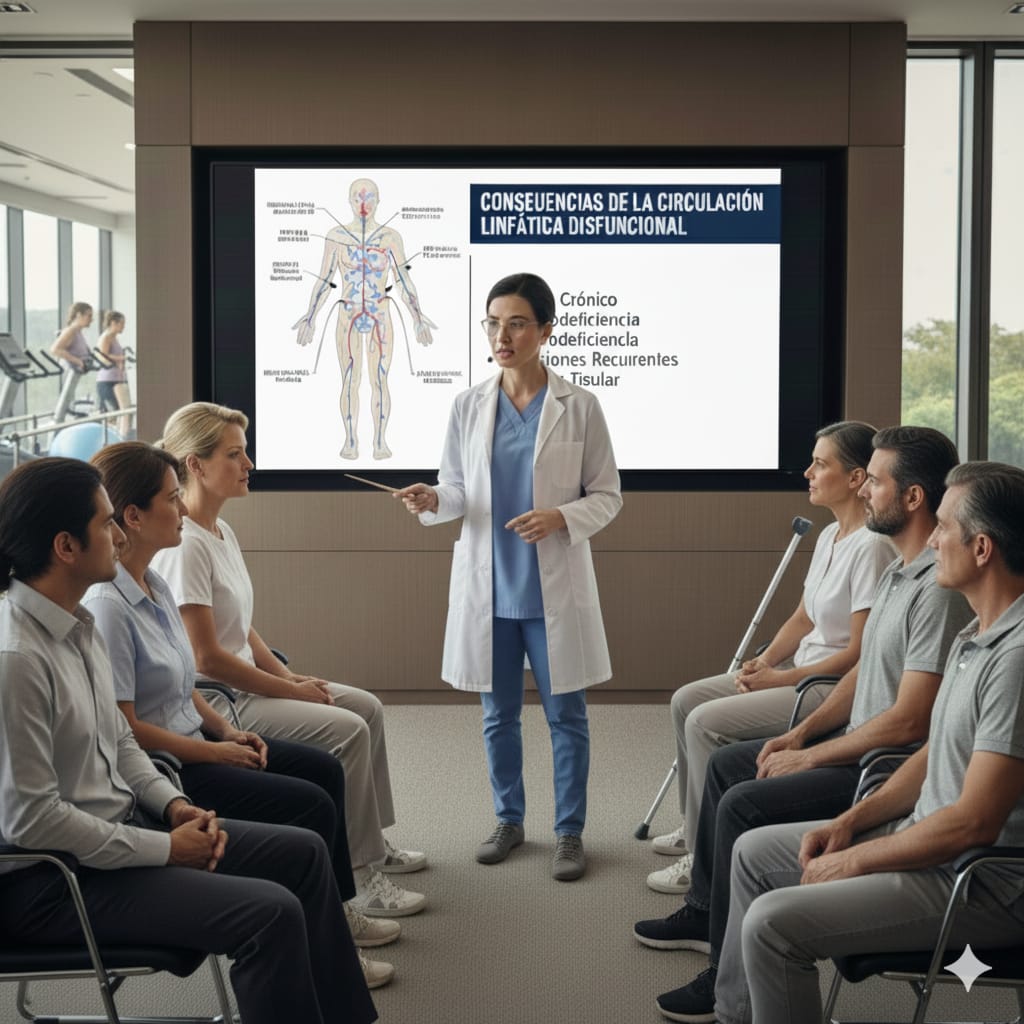
Lymphatic circulation is one of the most important systems of the human body, although for decades it was little understood outside the medical field. In recent years, interest in the lymphatic system has increased enormously within professional aesthetics, especially thanks to procedures such as manual lymphatic drainage, vaccination, press therapy and electrostimulation. However, there is still a lot of misinformation about what it really means “improving lymphatic circulation” and what proven benefits it offers at an aesthetic and health level.

This article analyzes, from a clinical and physiology-based approach, how the lymphatic system works, why it directly influences the appearance of the skin, what techniques have proven to be effective, and what limits exist to avoid false expectations. All content is made with foundations of lymphology, physiotherapy, dermatology and consolidated scientific studies.

What is lymphatic circulation and why is it vital for aesthetics?

The lymphatic system is a red one made up of vessels, nodes and specialized organs that are responsible for transporting lymph, a transparent liquid made up of:
 
• Proteins
• Metabolic waste
• Fats absorbed by the intestinal tract
• Immune cells
• Excess interstitial water
 
Its main function is to maintain the balance of fluids in the body and collaborate with the immune system.
From an aesthetic point of view, its role is fundamental because:
 
✔ Regulate fluid retention
When the line does not flow properly, the liquid accumulates between the cells, producing increase, heaviness and texture changes in the skin.
✔ Influences the appearance of cellulite
The accumulation of interstitial fluids and increases the pressure in the subcutaneous tissue, accentuating the characteristic dimples.
✔ Impacts skin quality
An efficient lymphatic circulation promotes oxygenation and toxin clearance, which is reflected in more luminous skin.
✔ Speed up recovery processes
 
After aesthetic treatments such as cavitation, radiofrequency or plastic surgery, an active lymphatic system helps eliminate inflammatory residues and accelerate tissue regeneration.
Understanding this allows us to understand why so many aesthetic techniques are focused on stimulating this system.

How does the lymphatic system work from clinical physiology?

Unlike the blood system, the lymphatic does not have a heart that pumps, so it depends on:
 
• Muscle contraction
• Respiratory movements
• Lymphatic valves
• Nearby arterial pulsations
• External controlled pressure (such as massages or pressotherapy)
Its flow can be altered by:
• sedentary lifestyle
•Chronic inflammation
• Obesity
• Vascular disorders
• Postoperative
• Extended external compression
• Venous return problems
In aesthetics, these factors are manifested as:
• Heavy legs
• Facial swelling
• Inflamed abdomen
• More visible cellulite
• Opaque skin
 
Hence the importance of techniques that help restore lymphatic flow.

Clinically proven aesthetic benefits

Not everything that is affirmed in social networks about “lymphatic drainage” is real, but there are benefits widely documented in advanced physiotherapy, lymphology and aesthetic medicine studies.
 
1 Reduction of edema (swelling)
Clinical evidence shows that techniques such as manual lymphatic drainage (Vodder method) or active pressotherapy mobilize interstitial fluid, reducing:
• Body volume per retention
• Post-surgical inflammation
• Heaviness in legs
This effect is especially noticeable in people with a sedentary lifestyle or in postoperative treatments.
2 Grade I and II cellulite improvement
Cellulite is not just fat: it involves inflammation, fibrosis and fluid retention. Lymphatic stimulation helps:
• Decrease internal pressure in adipose tissue
• Smooth irregularities
• Improve skin texture
Although it does not eliminate cellulite, it does visibly improve its appearance.
 
3 More luminous and even skin
Better lymphatic circulation favors:
• Disposal of cellular waste
• Increased oxygenation
• Reduction of inflammatory compounds
Therefore, many patients report “fresher skin” after the sessions.
 
4 Preparation and recovery of aesthetic treatment
It is clinically useful in:
• Post-liposculpture
• Post-liposuction
• Post-radiofrequency
• After procedures with temporary edema
Plastic surgeons and physiotherapists recommend you to prevent fibrosis and speed recovery.

Aesthetic techniques that improve lymphatic circulation (clinically supported)

Here only techniques evaluated by real physiological principles and used in professional aesthetics are presented.
1 Manual Lymphatic Drainage (Vodder/Foldi Method)
It is the most studied technique and the one with the greatest clinical evidence.
✔ Smooth, rhythmic and precise movements
✔ Stimulates lymphatic valves
✔ Node-congestion
✔ Reduce edema effectively
It originated as a medical treatment, so its aesthetic application is based on solid principles.
2 Sequential Pressotherapy
Use progressive pneumatic compression.
BENEFITS:
• Push excess fluid into the ganglia
• Improves the feeling of heaviness
• Promotes venous and lymphatic return
Studies in peripheral vascularization demonstrate its effectiveness in legs.
3 Vacuum therapy (vacuum therapy)
When applying controlled suction:
• Separates the tissues superficially
• Stimulates microcirculation
• Facilitate lymphatic drainage
Its aesthetic use is especially useful for improving cellulite and skin texture.
4 Muscle Electrostimulation (EMS)
Repeated muscle contraction favors:
• Venous return
• Natural lymphatic pumping
• Muscle tone
• Reduction of abdominal and leg retention
It does not replace the exercise, but it does complement it.

Common myths about aesthetic lymphatic circulation

Aesthetics is full of exaggerated promises. Here is the clinically true:

❌ Does not remove fat
❌ Does not replace exercise
❌ Does not change the buttock structure permanently
❌ Not a replacement for plastic surgery
❌ Does not “detoxify the body totally” (that is mainly done by the liver and kidneys)

What it does: Improves circulation, reduces retention, helps the tissue and promotes the appearance of the skin.

Who benefits the most from improving lymphatic circulation?

• Sedentary people
• Post-surgical patients
• People with Grade I–II cellulite
• Who have tired legs or mild edema
• People who retain fluids with ease
• Users of body aesthetic devices
It is also useful for models, content creators, athletes and people who require optimal skin appearance.

When should it be avoided? (clinical contraindications)

Lymphatic stimulation should not be performed in:
• Heart failure
• Active skin infections
• Thrombosis or thrombotic risk
• Untreated cancer
• fever
• Uncontrolled severe hypertension
These contraindications are part of recognized medical protocols for lymphotherapy.

How often should it be done to see results?

Clinical standards for fine aesthetics:
• 2–3 sessions per week
• 8–12 sessions to notice visible changes
• Maintenance every 15–30 days
 
Accelerated results are observed when combined with: 
• Correct hydration
• Daily mobility
• Low sodium diet
• Strength training
 
conclusion
Improving lymphatic circulation is not just an aesthetic trend: it is an essential component of tissue health, backed by decades of clinical evidence. Although they do not replace medical treatments or structural procedures such as surgery, its aesthetic benefits 
  • Edema reduction
  • cellulite improvement
  • brighter skin
  • accelerated recovery
It is a safe, effective and perfectly integrable approach within professional protocols of advanced aesthetics, always carried out by trained personnel and following clinical standards.

Digital Course:

Related Articles

No Results Found

The page you requested could not be found. Try refining your search, or use the navigation above to locate the post.

Become a certified expert in smart microneedling

Access to my premium course

Learn to master the most advanced facial rejuvenation technique adapted to Latin skins.

subscribe to my list

I only commit to sending you a quality email monthly 


Follow us

Follow me on all my social networks 

0
    0
    your cart
    Your Cart is emptyreturn to shop